Do Investing Legends Still Have an Edge?
Every generation of investors has its legends — Warren Buffett, Peter Lynch, Joel Greenblatt, James O'Shaughnessy. Their rules, formulas, and philosophies have inspired millions of people to invest smarter and plan for long‑term success. But in a world of algorithmic trading, robo‑advisors, and meme‑stock chaos, one big question remains:
Do guru investing strategies actually beat the market today?
It’s a fair question — and an important one. If time‑tested investing strategies can still deliver better performance than simply buying an index fund, then everyday investors have a powerful roadmap for building wealth with more confidence and less guesswork.
In this article, we break down what guru strategies are, why people follow them, and how they perform when benchmarked against the broader market.
What Are Guru Investing Strategies?
Guru strategies are rule‑based investing frameworks created by well‑known investors. They turn each expert’s approach into a repeatable formula — something any investor can follow.
Examples include:
- Warren Buffett: Buy wonderful businesses at fair prices. Favor strong balance sheets and durable competitive advantages. Hold as long as possible for long term growth.
- Joel Greenblatt: Focus on return on capital and earnings yield in his “Magic Formula” to identify companies with strong fundamentals that may be temporarily undervalued.
- Peter Lynch: Invest in what you know. Favor companies with clear growth stories and reasonable valuations.
- James O'Shaughnessy: Focus on a quantitative, rules-based approach that combines value and momentum factors – or sometimes other metrics depending on the strategy, but always a focus on metrics over emotion.
These strategies appeal to investors because they create structure, consistency, and discipline — the opposite of emotional, impulsive investing or gut reactions to market dynamics.
Why Investors Are Turning Back to Rules-Based Strategies
Investors turn to structured approaches for three reasons:
1. The market is noisy — rules reduce overwhelm.
From earnings headlines to the social‑media hype, investors are bombarded with opinions. A strategy cuts through the noise to focus on the quantitative metrics that matter.
2. Evidence beats emotion.
Strategies rooted in fundamentals give investors confidence. They help answer the key questions: Is this a good investment? Am I overpaying?
3. Performance can be measured and improved.
Unlike gut‑driven decisions, a rules‑based approach can be benchmarked and optimized over time.
For Accountable Finance users, these rules become even more powerful because they can be applied automatically, tracked dynamically, and compared to market benchmarks.
Do Guru Strategies Actually Outperform the Market?
Short answer: Sometimes.
Longer answer: It depends on the strategy, the timeframe, and the market environment.
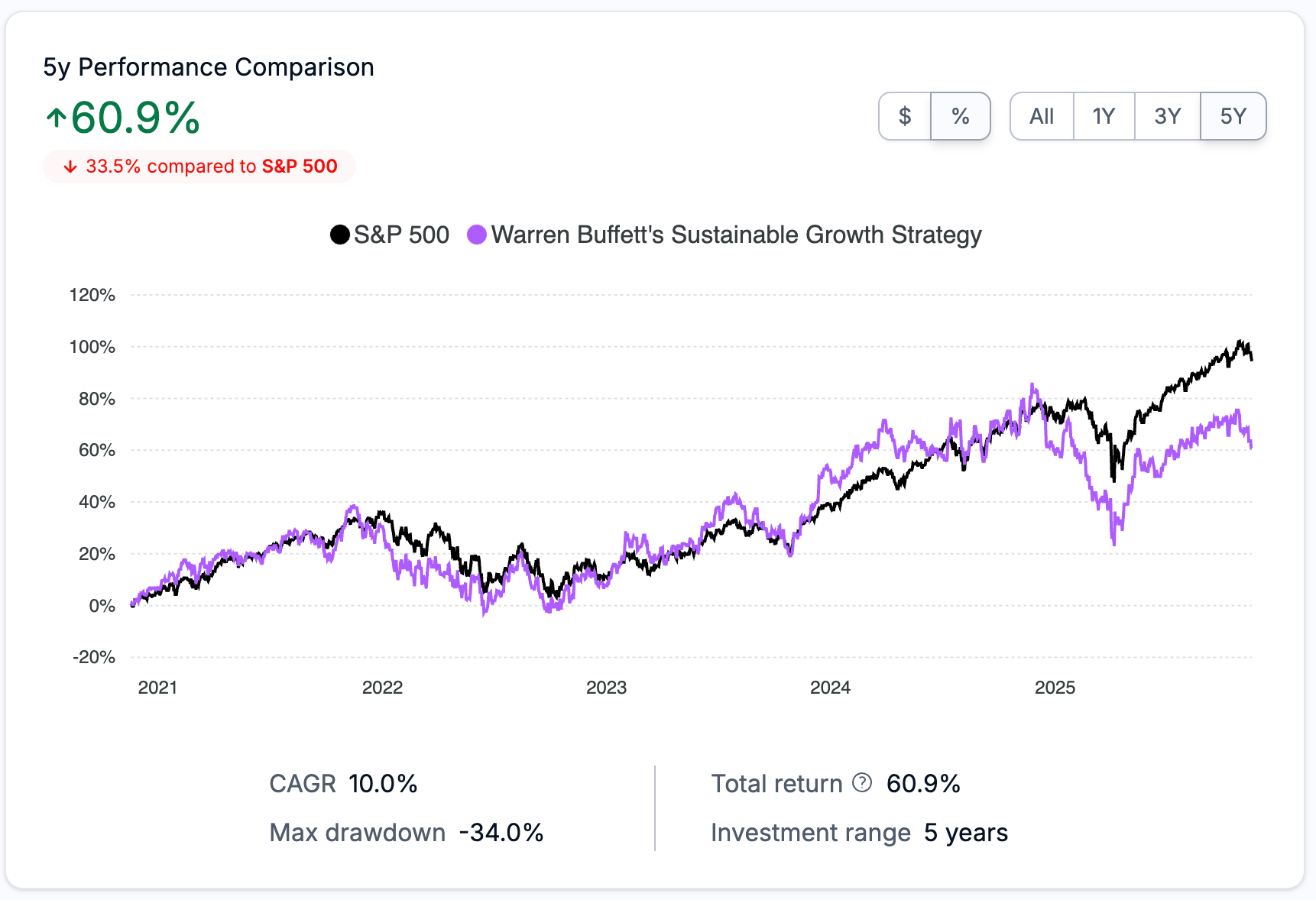
Value-based strategies (Buffett-style)
These strategies tend to outperform during periods when markets reward fundamentals — steady earnings, strong cash flow, low debt. Historically, value strategies have beaten the market over long periods, though they can lag during high‑growth or speculative cycles.
Here’s the 5-year performance for Warren Buffet vs the S&P:
Explore More >> Warren Buffet strategy performance
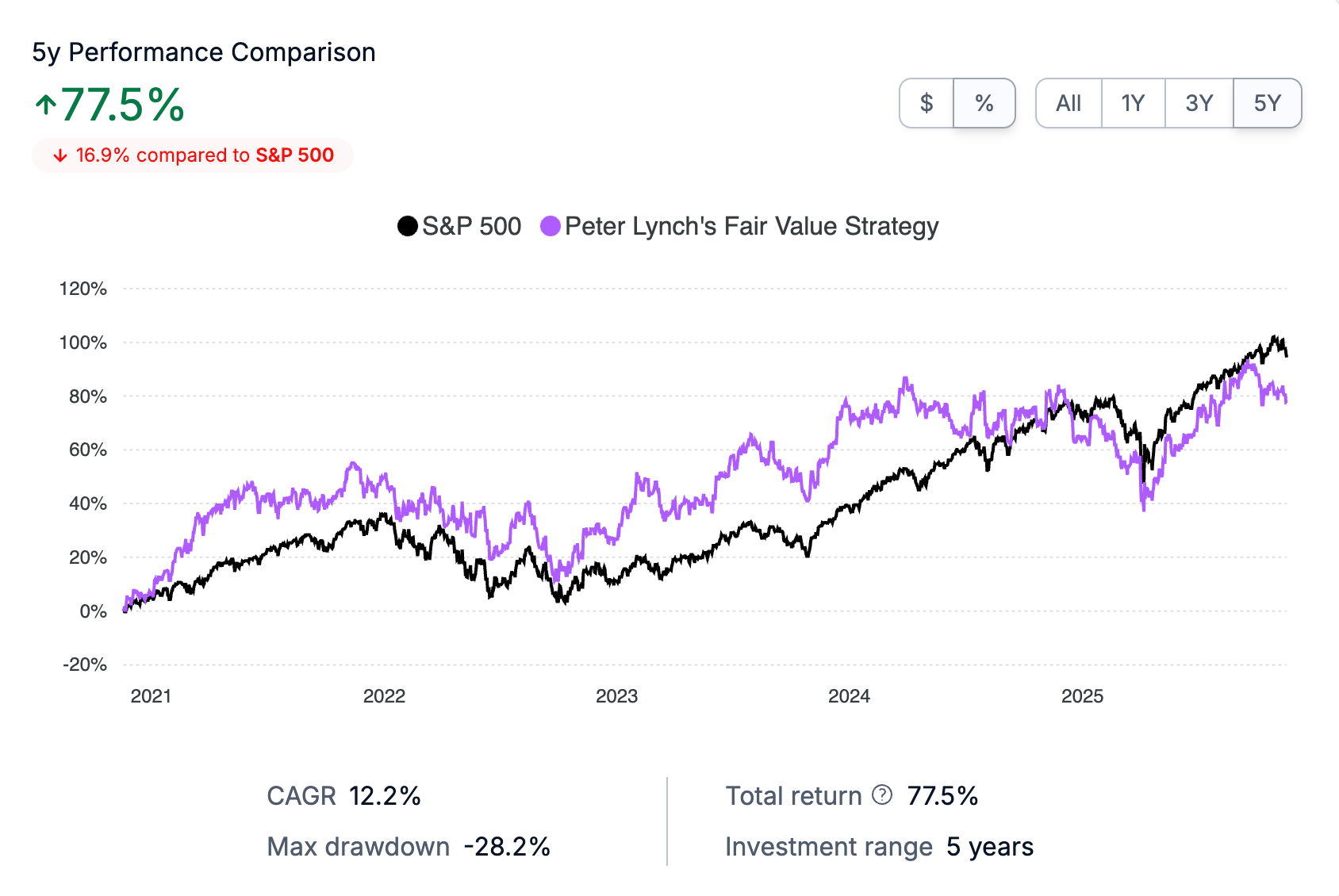
Growth-focused strategies (Lynch-style)
Growth screens often shine during innovative cycles — technology booms, consumer trends, or industries on the rise. But they can struggle when valuations become overheated.
Explore More >> Peter Lynch strategy performance
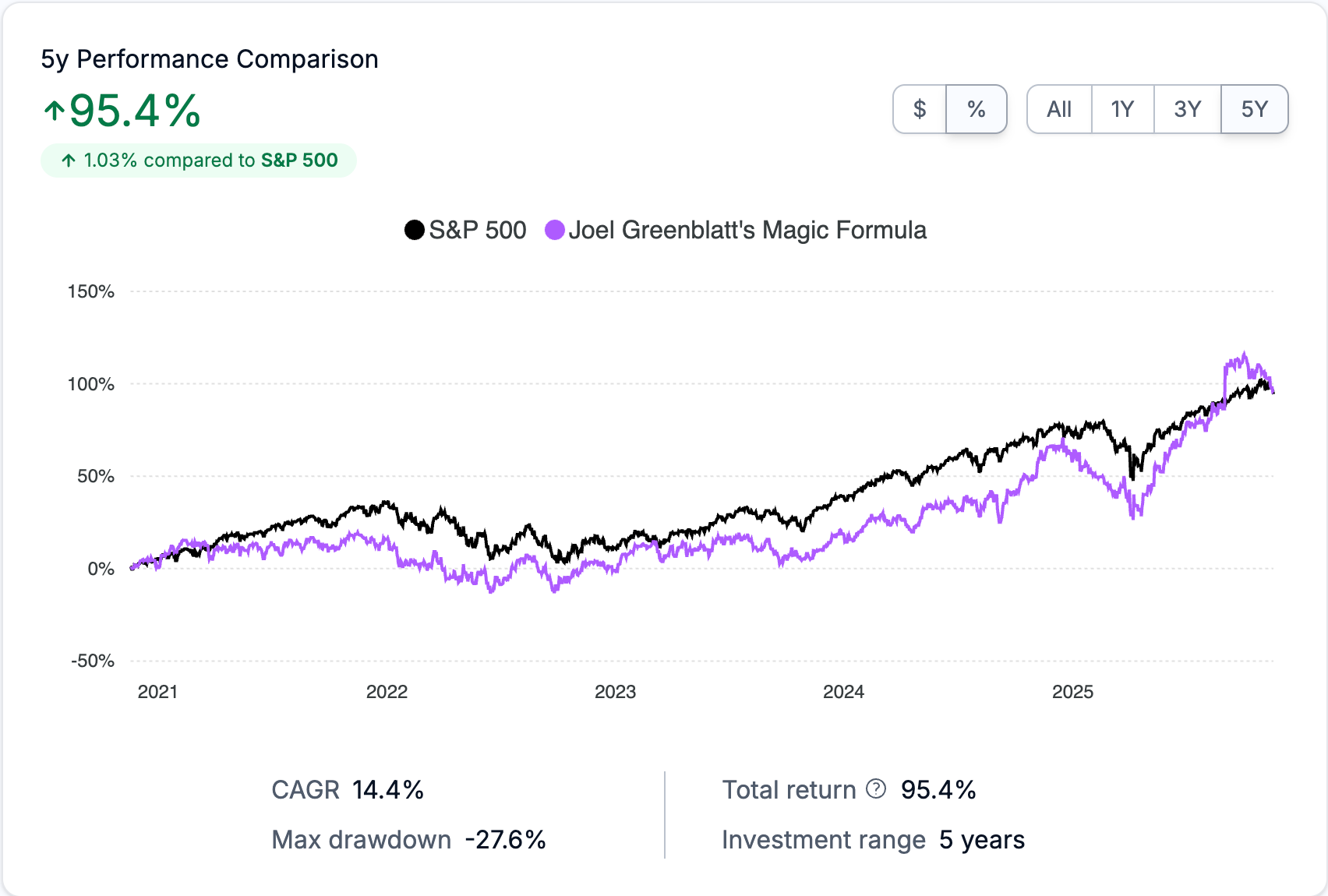
Undervalued (Greenblatt-style)
Greenblatt's approach ranks companies by return on capital and earnings yield, targeting businesses that are both high quality and attractively priced. Historically, Magic Formula portfolios have shown strong long-term performance, though results can vary year to year and in recent years have slumped vs the S&P.
Explore More >> Joel Greenblatt strategy performance
Combined, diversified strategies
The most durable investing strategies blend value, quality, and growth factors. Many guru approaches overlap in these areas — which is why they remain relevant. Investors can combine their favorite elements to explore and create their own strategies with Accountable Finance’s AI strategy creator, then simulate the results to see how their new custom strategy would have performed.
How Benchmarking Reveals the Truth
One of the biggest challenges for retail investors isn’t picking a strategy — it’s knowing whether it’s working.
Benchmarking solves this by comparing your strategy’s performance to:
- The S&P 500 or other major indexes
- Sector or industry performance
- Other guru strategy returns
With clear benchmarks, investors can answer questions like:
- Is my value strategy beating the market?
- Which guru rules work best in today’s environment?
- Is my personal strategy outperforming the pros?
Tools like Accountable Finance make this benchmarking instant and automatic — helping investors build conviction and refine their playbooks.
So… Do Guru Rules Beat the Market?
Here’s the balanced truth:
- Many guru strategies have outperformed over long periods.
- Some strategies outperform for several years, then fall behind when market dynamics fundamentally shift.
- No strategy wins in all market conditions.
- The real power is in having a strategy at all — not reacting on impulse to day-to–day changing stock market conditions and noise.
Most importantly: Investors with disciplined rules tend to perform better than those without any strategy, because consistency beats emotion.
Strategies Don’t Just Build Returns — They Build Confidence
You don’t need to be Warren Buffett to borrow his wisdom. You don’t need to be Peter Lynch to apply his principles. And you don’t need a finance degree to invest with confidence.
Whether you follow a guru or create your own strategy, the key is structure, discipline, and benchmarking your progress.
That’s exactly what Accountable Finance is built to help you do.
Ready to compare top investing strategies — or test your own — against real market benchmarks? Explore how Accountable Finance can help you invest smarter, faster, and with more confidence.